International Forum of Organizational Sciences Opens SymOrg 2026
Unlocking Regional Potential Through Academia-Industry Collaboration
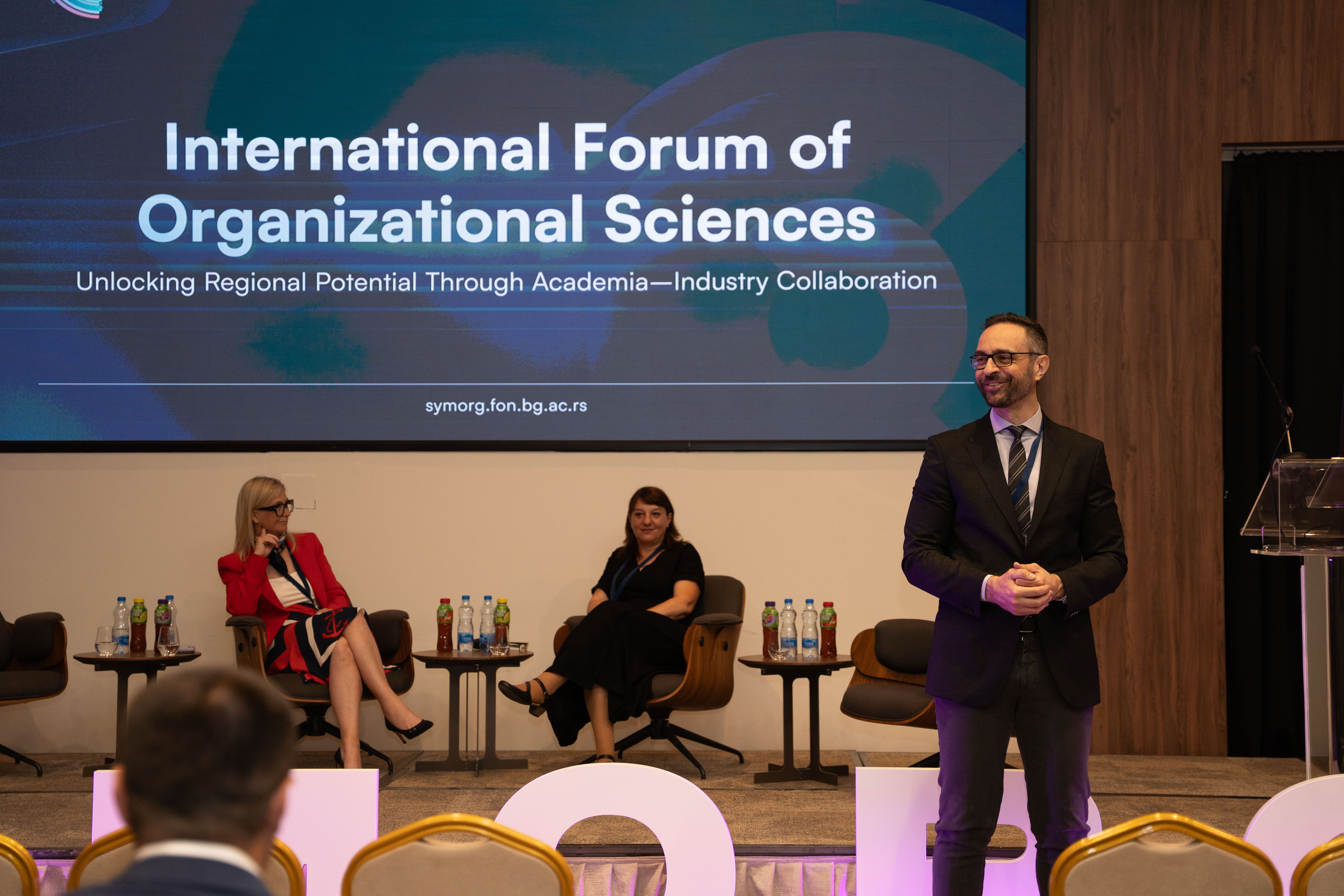
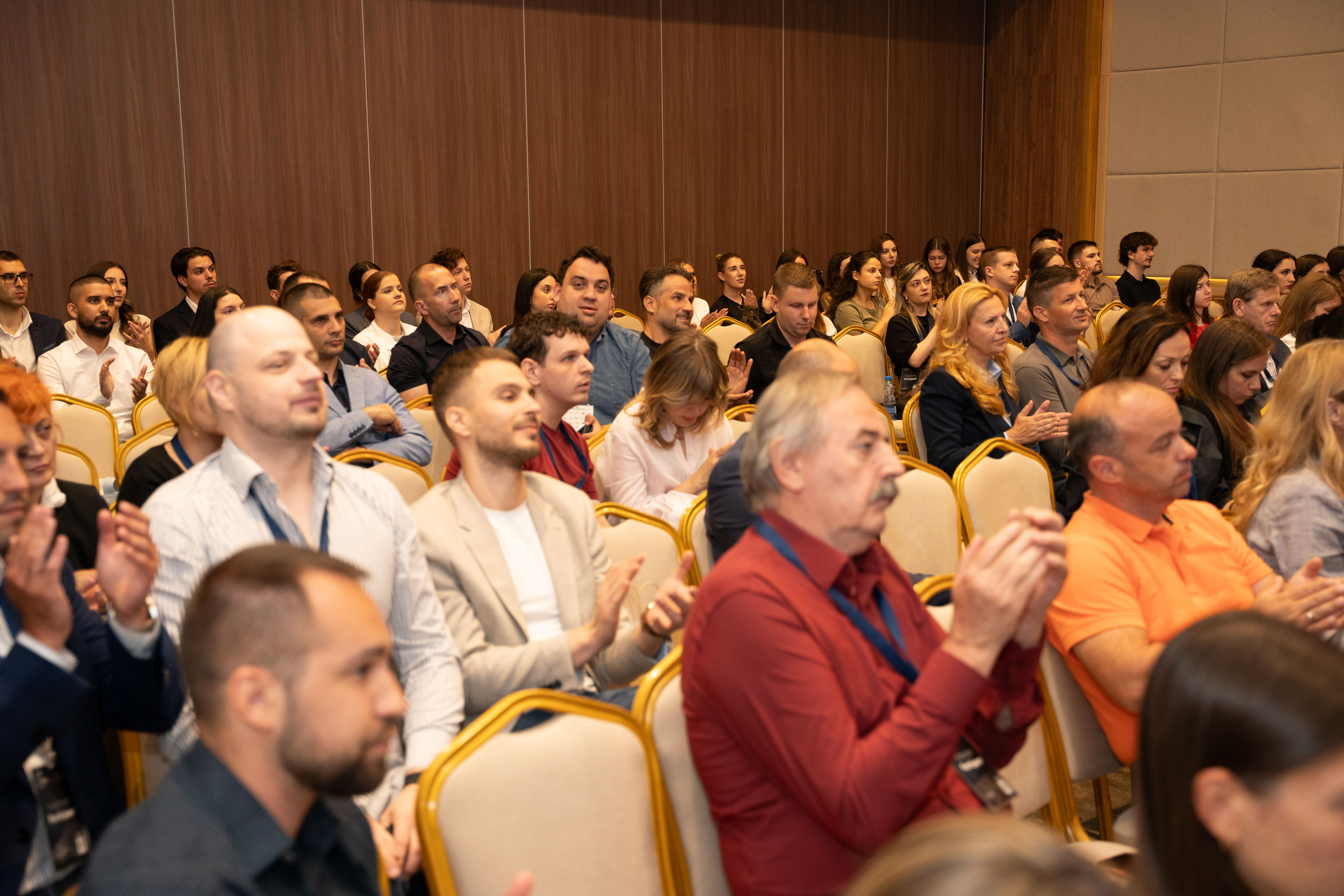
The opening of the international scientific symposium SymOrg 2026 was preceded by the International Forum of Organizational Sciences, dedicated to the theme “Unlocking Regional Potential Through Academia–Industry Collaboration.” The Forum brought together representatives of leading academic institutions and companies from across the region with the aim of exchanging experiences, strengthening regional cooperation, and defining joint responses to the challenges that rapid technological change poses to education, research, and business.
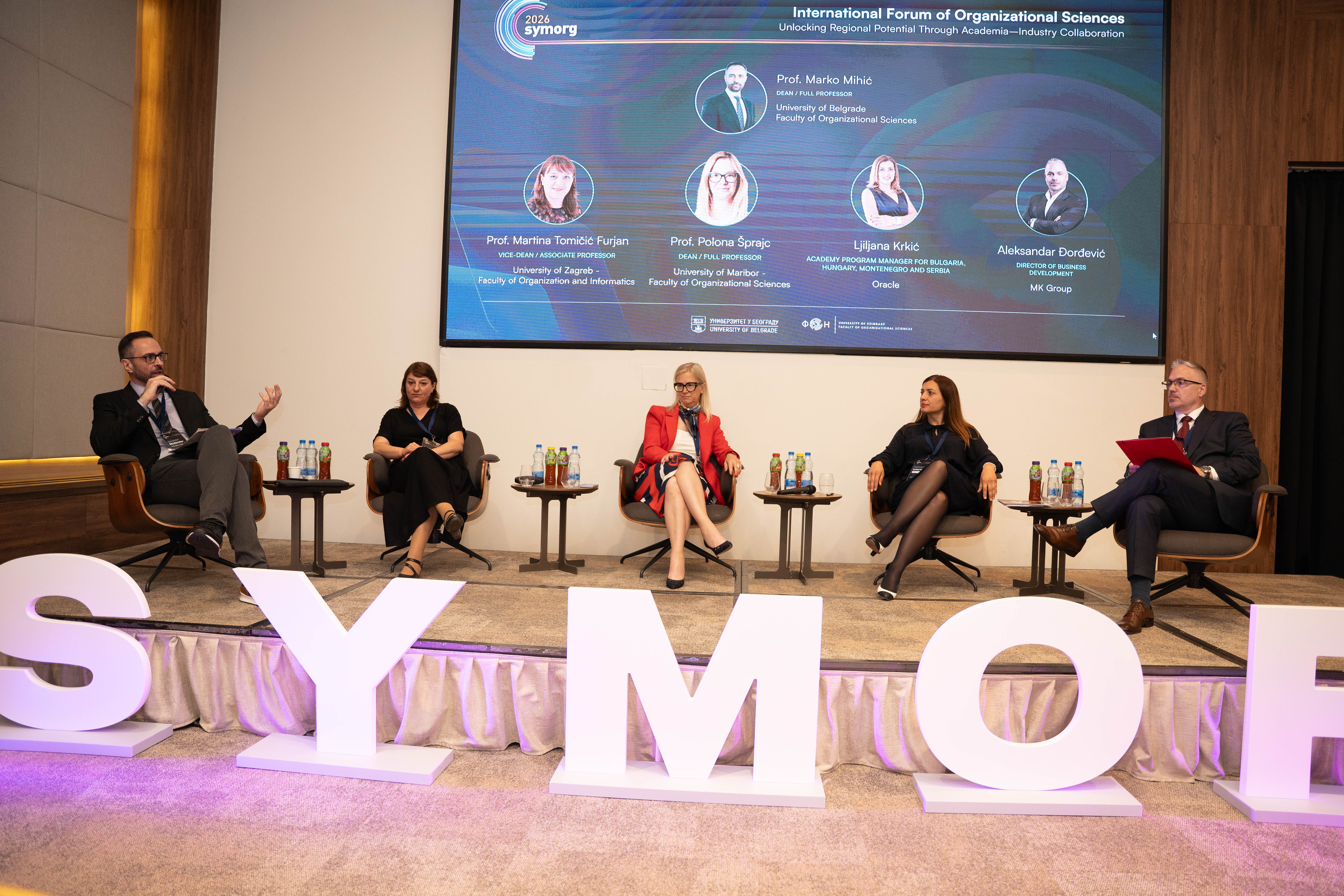
The Forum was organized into two program segments. The first part focused on presenting faculties and exchanging experiences among higher education institutions that educate future professionals in the field of organizational sciences, while the second part provided an opportunity for industry representatives to discuss contemporary business challenges, organizational practices, and the importance of cooperation with academia. The first segment featured leading regional institutions in the field of organizational sciences: the Faculty of Organizational Sciences of the University of Maribor, the Faculty of Organization and Informatics of the University of Zagreb, and the Faculty of Organizational Sciences of the University of Belgrade.
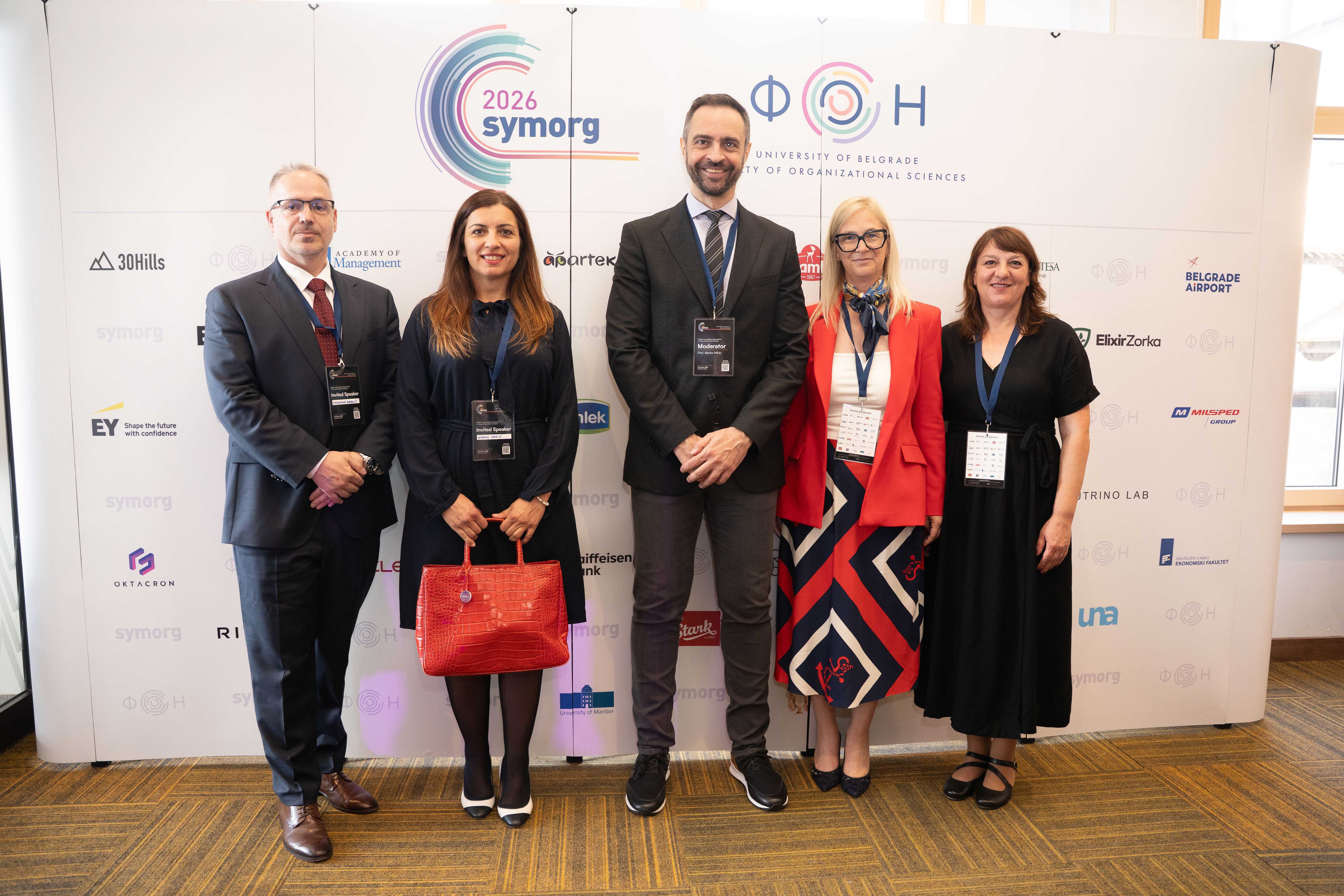
The Forum was moderated by Prof. Marko Mihić, Dean of the Faculty of Organizational Sciences, University of Belgrade, who emphasized that organizational sciences play a crucial role in connecting knowledge, innovation, and development, while regional cooperation represents one of the most important prerequisites for their further advancement.
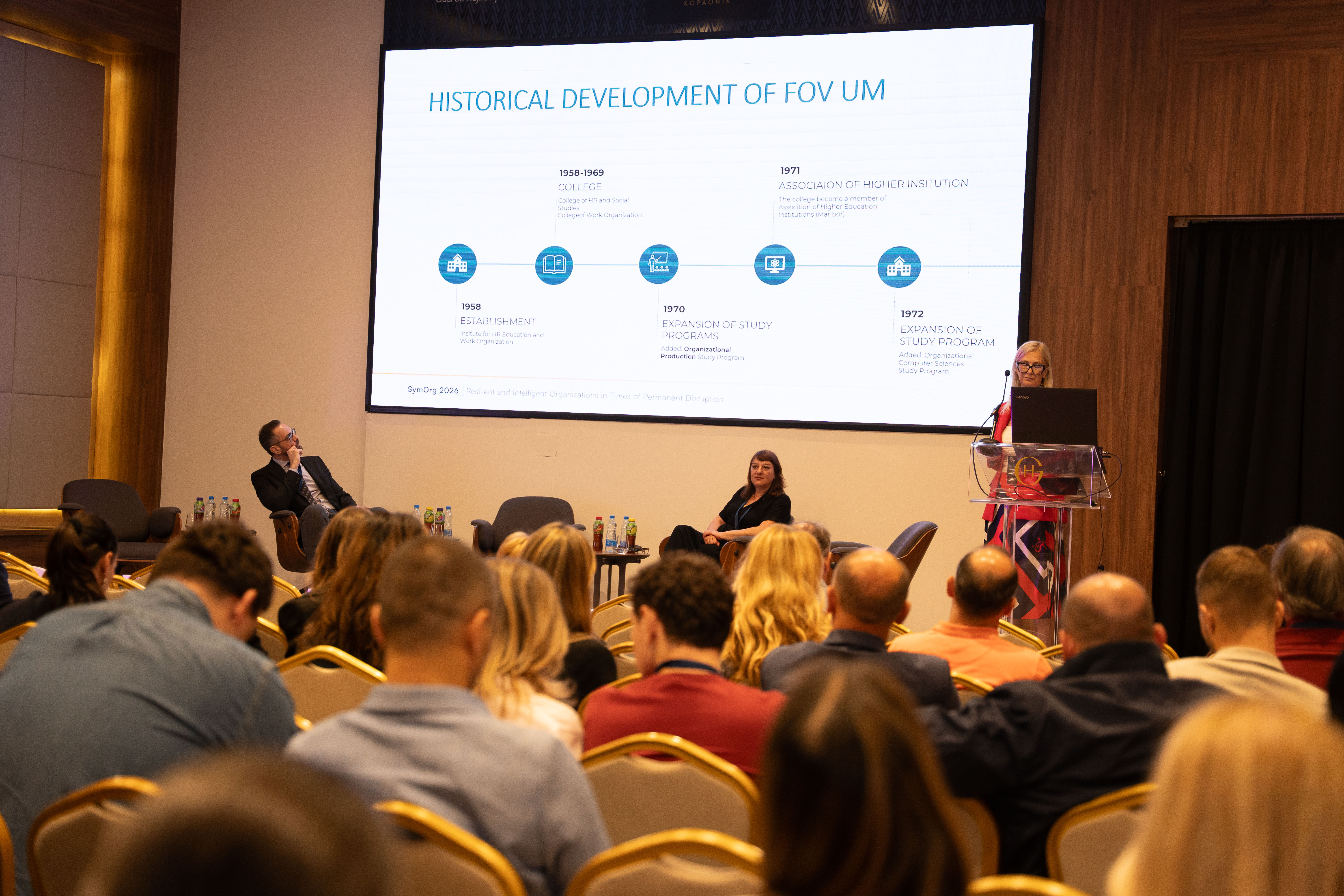
The academic segment of the Forum was opened by Prof. Polona Šprajc, Dean of the Faculty of Organizational Sciences at the University of Maribor, who presented the development journey of an institution that will soon celebrate seven decades of existence. Reflecting on the faculty’s history, she noted that it was established in response to the needs of industry in the late 1950s and has been dedicated from its very beginnings to developing organizational competencies and human resource management.
She outlined the faculty’s transformation over the decades, from its earliest study programs to contemporary interdisciplinary fields that today include human resource management, information systems organization, crisis management, sports management, healthcare management, and social welfare management. She particularly highlighted the institution’s remarkable growth, which has resulted in more than 1,200 students enrolled across all levels of study, as well as its strong commitment to research, international cooperation, and projects that connect universities, companies, and local communities.
Following this presentation, Prof. Martina Tomičić Furjan, Vice-Dean for Science, Projects and International Cooperation at the Faculty of Organization and Informatics, University of Zagreb, introduced one of the region’s leading academic institutions, which for more than six decades has successfully integrated the fields of information technology, economics, and organization.
Speaking about contemporary approaches to education, she emphasized the importance of interdisciplinarity, fostering an entrepreneurial mindset, and strengthening connections between students and industry. Special attention was given to the work of the Career Development and Student Support Center, cooperation with more than 500 companies, startup development programs and business incubators, as well as investments in research infrastructure through a network of 19 laboratories and numerous international projects.
“Respect, trust, mutual understanding, collaboration, shared values, and joint efforts are the foundations of successful regional cooperation,”
Prof. Tomičić Furjan stated, emphasizing that it is precisely the joint efforts of academic institutions that create the conditions for sustainable regional development.
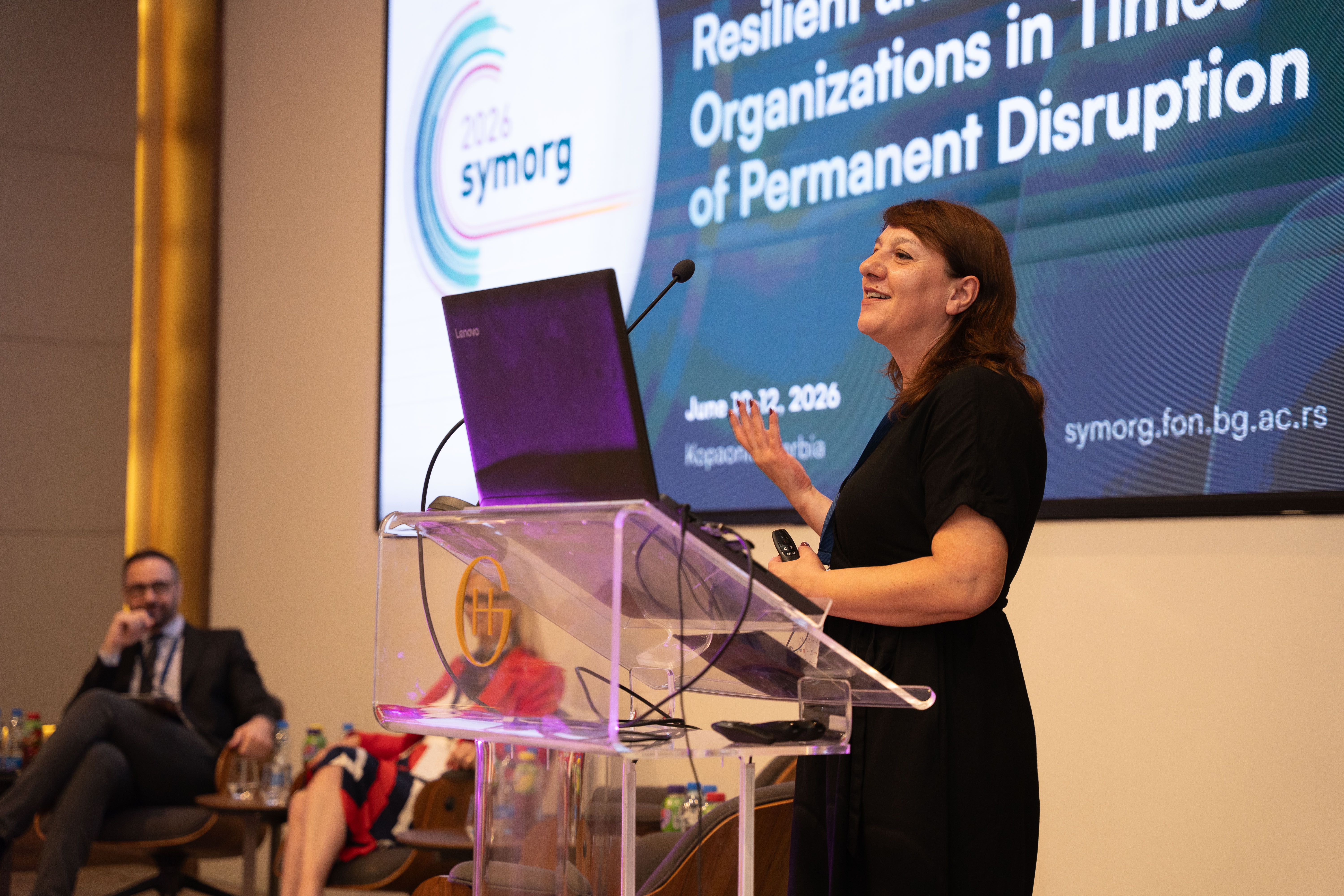
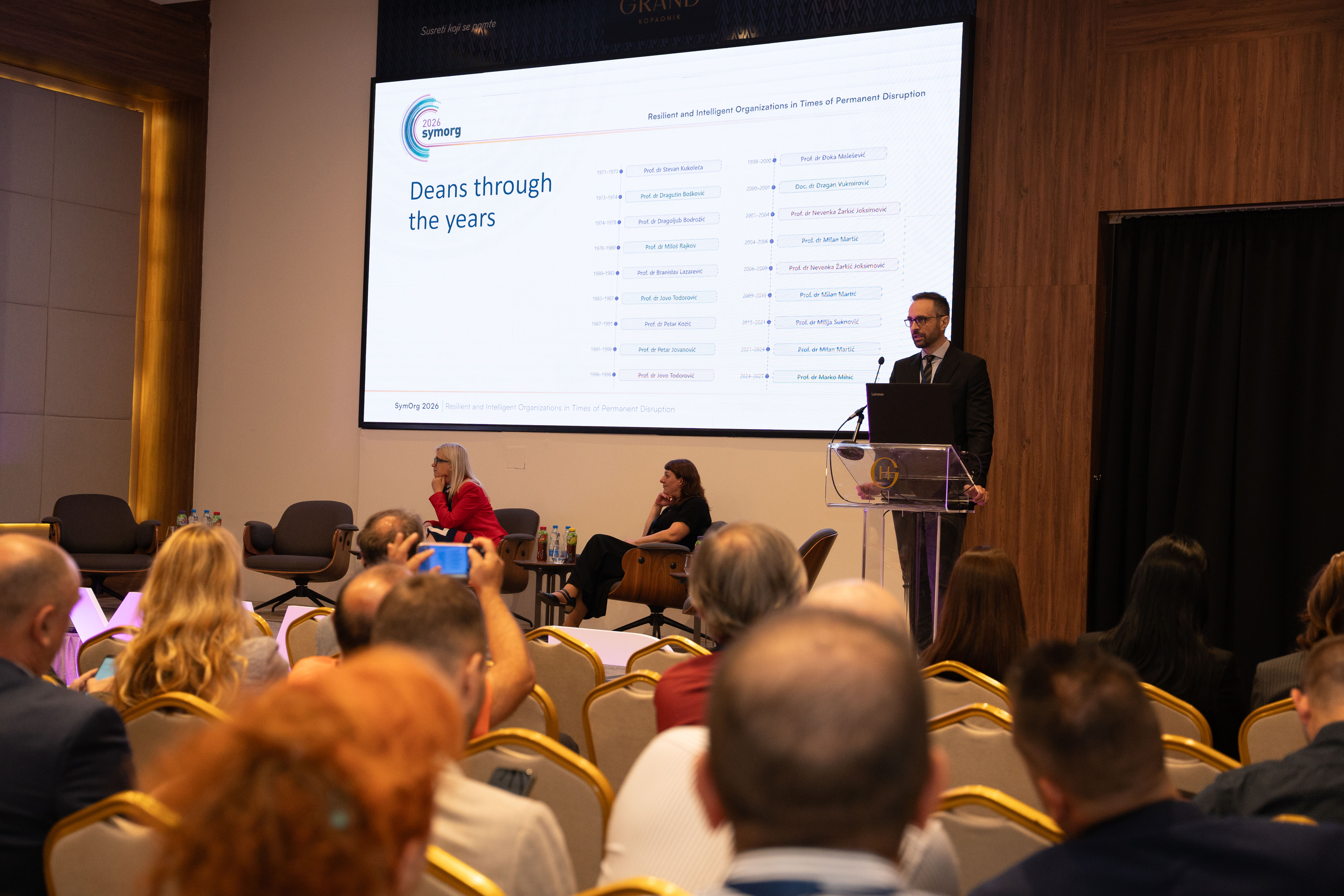
Presenting the Faculty of Organizational Sciences, University of Belgrade, Prof. Marko Mihić discussed the faculty’s development, its educational and research mission, and the role FON plays within both the regional and international academic landscape. He stressed that organizational sciences constitute a highly multidisciplinary field that integrates management, information systems, technology, economics, and social sciences to address the complex organizational challenges of contemporary society.
The audience was introduced to the faculty’s achievements in education, research, and industry collaboration. Emphasis was placed on the concept of integrating education, research, and networking, which represents one of the key strategic pillars of the Faculty of Organizational Sciences.
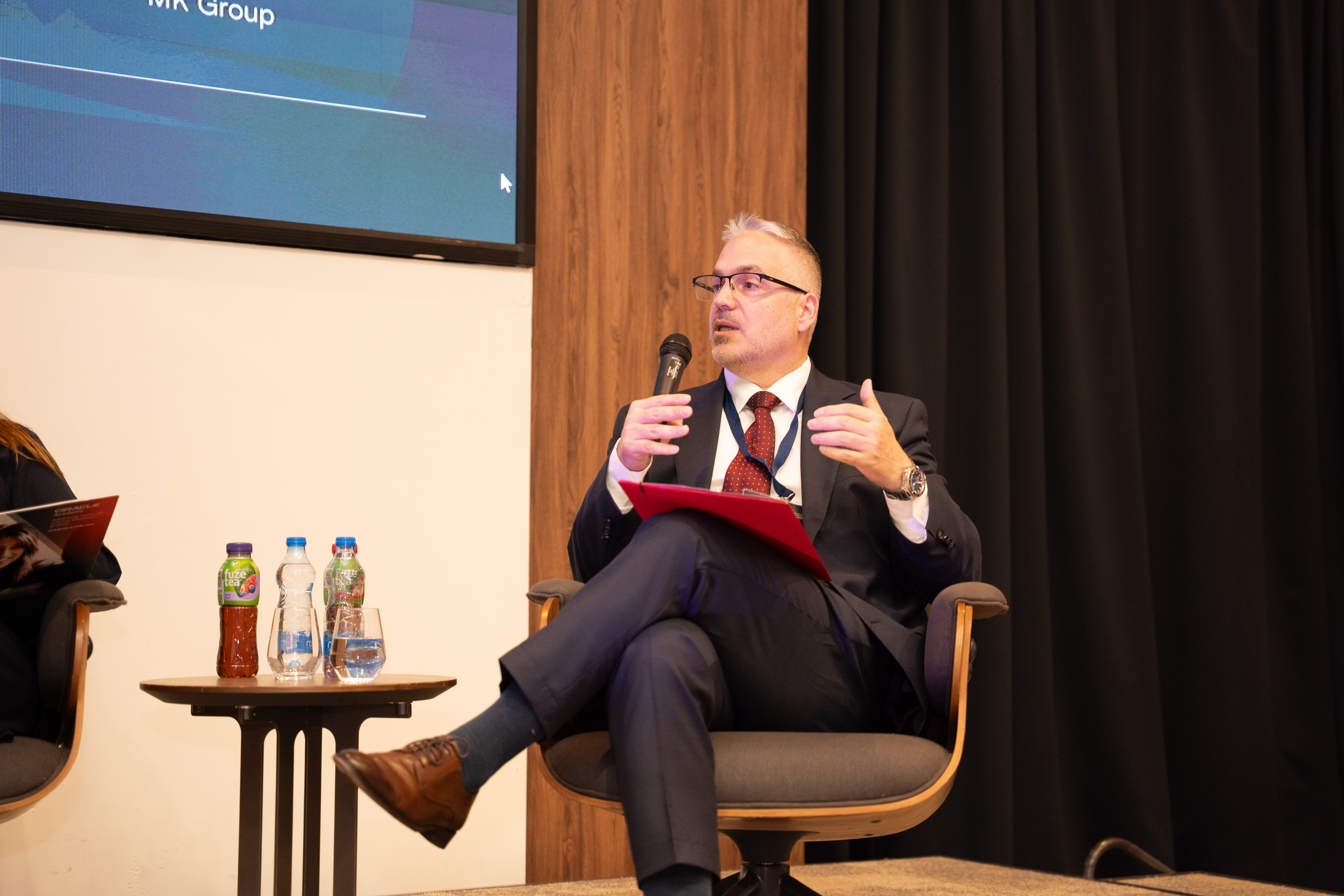
The second part of the Forum focused on the industry perspective and opportunities for strengthening cooperation between universities and companies. The discussion featured Ljiljana Krkić, Academic Relations Manager for Bulgaria, Hungary, Montenegro, and Serbia at Oracle, and Aleksandar Đorđević, Development Director at MK Group.
Addressing the challenges of the contemporary business environment, participants highlighted the growing demand for professionals who possess not only technical expertise but also strong organizational, communication, and leadership skills. It was emphasized that cooperation between universities and industry is no longer merely desirable but has become an essential prerequisite for innovation, competitiveness, and sustainable economic growth.
Industry representatives engaged in discussions with the academic community on changes in the labor market, the impact of artificial intelligence, the development of future-oriented competencies, and ways to enhance collaboration between universities and businesses.
The discussion was structured around three thematic cycles. The first focused on identifying industry needs and aligning education with the demands of the contemporary labor market. Participants noted that more than three million jobs across the region are already exposed to the impact of artificial intelligence, underscoring the need for a faster adaptation of study programs to emerging realities.
Participants identified three key areas in which graduates most frequently demonstrate shortcomings: problem solving in unpredictable situations, taking responsibility and making independent decisions, and communicating effectively with internal and external stakeholders. It was emphasized that the primary challenge is no longer the acquisition of theoretical knowledge but rather its application in a dynamic and uncertain business environment.
Discussing the challenges of transforming educational systems, Prof. Tomičić Furjan pointed to the slow pace of institutional change.
“It takes three to four years for an idea to become a concrete change within the education system. Cooperation with industry must be more frequent, more intensive, and more systematically organized,” she stated.
Prof. Šprajc highlighted regulatory constraints faced by universities in certain countries across the region, emphasizing that the academic community must place greater focus on applied research.
“Our research cannot be purely theoretical. Its value is also measured by the impact it generates in practice,” she noted.
The second thematic cycle focused on technological development, artificial intelligence, and automation. Company representatives emphasized the importance of platforms that provide students with direct exposure to emerging technologies and tools, stressing that an entrepreneurial mindset, adaptability, and commitment to lifelong learning have become just as important as technical competencies.
Attention was devoted to involving academic staff in industry collaboration through workshops, case studies, and joint development projects. Participants agreed that such models represent one of the most effective ways of bridging the gap between academia and business.
During discussions on research and development, it was concluded that there is considerable interest among companies in collaborating with universities. However, differences in the operating dynamics of academia and industry remain a challenge. While businesses operate according to short-term cycles and quarterly objectives, academic research often requires years of sustained effort. As a result, participants emphasized the need for new collaboration models in which the outcomes of joint initiatives are not limited to scientific publications but also include tangible and market-applicable solutions.
The Forum concluded with a discussion on the strategic development of organizational sciences and the role of regional cooperation in creating a competitive educational and research environment.
“We must think strategically and long term, about the next five years, not only about the challenges we face today,” emphasized Prof. Marko Mihić, Dean of the Faculty of Organizational Sciences, University of Belgrade.
Speaking about the future of academic institutions, he stressed that their sustainable development rests on three key pillars: stable funding for education and research, institutional autonomy in shaping development policies, and strong regional cooperation as a driver of collective progress. He also highlighted the importance of international accreditations as evidence of quality and alignment with the highest global standards.
Among the concrete priorities identified for future action were the establishment of a regional platform connecting universities and companies, more systematic monitoring of technological trends, the development of joint research projects, and the stronger integration of labor market needs into the design of study programs.
The International Forum of Organizational Sciences at Kopaonik was not merely an introduction to SymOrg 2026; it was a powerful affirmation that the future of the region depends on its ability to connect knowledge, innovation, and collaboration. At a time when artificial intelligence is reshaping the rules of the game faster than ever before, universities and companies can no longer operate as separate systems. Through regional networking, interdisciplinarity, and the joint creation of solutions, a new generation of leaders, researchers, and innovators is emerging. The message of the Forum was clear: the region will not build its competitiveness on the resources it possesses, but on the knowledge, it creates and the partnerships it succeeds in building.
Photo Gallery
Latest News
View AllSymOrg 2026 Concludes: Trust, Artificial Intelligence, and Future Competencies Take Center Stage at the Anniversary Edition
The third and final day of the International Symposium on Organizational Sciences SymOrg 2026 was marked by discussions on key issues shaping contemporary society and business, including the role of artificial intelligence, the importance of building trust within organizations, and the development of competencies necessary to address future labor market challenges. This successfully concluded with the 20th anniversary edition of SymOrg, one of the leading international scientific conferences in the field of organizational sciences.
From Science to Innovation: Day Two of SymOrg 2026 Brings Together Academia, Industry, and the Startup Community
The second day of SymOrg 2026 brought together thematic and poster sessions, the Business Forum, Startup Presentations, and the Students Startup Achievement session.
SymOrg 2026 Opens: Twentieth Edition of the Leading International Symposium on Organizational Sciences Brings Together the Global Academic Elite
The Faculty of Organizational Sciences, University of Belgrade, has officially opened the 20th International Symposium on Organizational Sciences - SymOrg 2026.